Bernini’s Royal Gesture
In the year 1636, Pope Urban VIII was troubled by the strained relations between the Catholic Church and Protestant England. Hoping to improve these relations, the Pope decided to send a gift to Queen Henriette Marie, who was also Catholic, as she was the wife of King Charles I, a Protestant monarch. Although the marriage was initially controversial, the Pope eventually gave his blessing, hoping it would lead England back to the Catholic fold. The Pope’s gift was to be a statue of the king, ordered from the renowned Italian sculptor Gian Lorenzo Bernini. This gesture of favor and goodwill would later play a significant role in English history.
Bernini’s Challenge
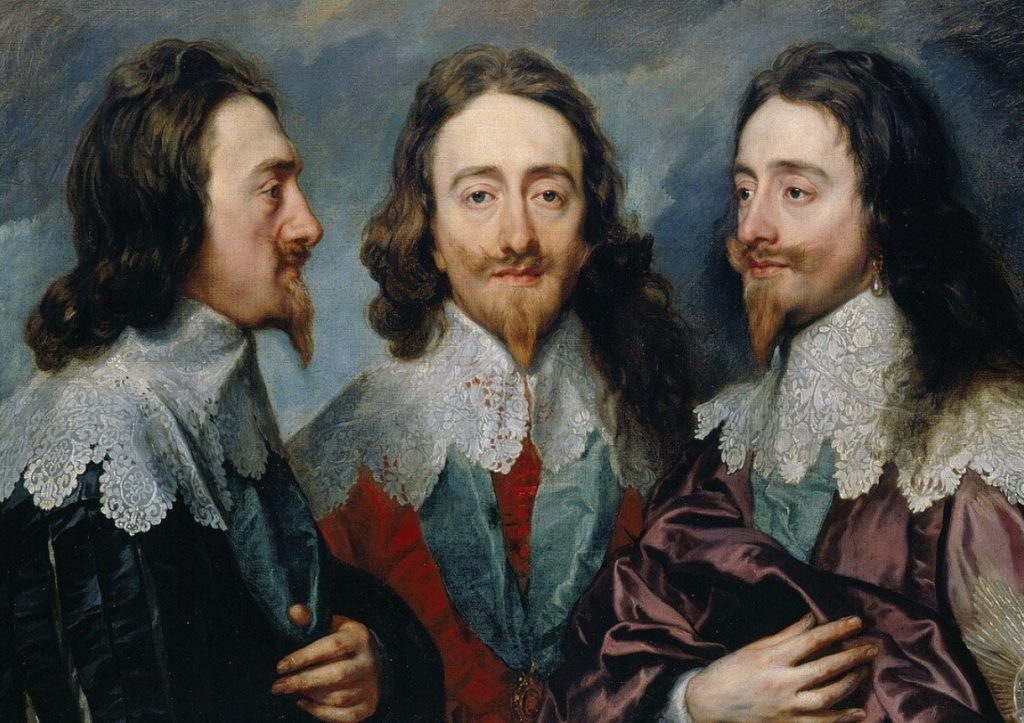
King Charles I was delighted to learn about the Pope’s gift, but Bernini’s inability to travel to England to create the sculpture was disappointing. Undeterred, the king asked the Flemish painter Anthony Van Dyck to paint his portrait in three different perspectives, providing a model for Bernini’s work. Van Dyck’s masterpiece depicted the king from various angles, capturing different aspects of his personality and character.
The Sculpture’s Creation
Bernini was inspired by Van Dyck’s painting and decided to keep it for himself, recognizing it as a masterpiece. Using the portrait as a guide, he began crafting the statue from fine Carrara marble. The attention to detail was remarkable, with every aspect of the king’s appearance and personality meticulously captured in stone. The completed statue portrayed a strong and confident leader, wearing the badge of the Order of the Garter—a symbol of his loyalty to the kingdom.
The Statue’s Reception
The Pope was pleased with Bernini’s masterpiece and sent it to England in 1638. King Charles I was deeply impressed and rewarded Bernini with jewels worth a substantial amount, reflecting the king’s admiration for the sculptor’s talent and craftsmanship. The statue was proudly displayed in the main hall of Whitehall Palace, serving as a symbol of the king’s power, authority, and the Pope’s support.
The Marriage and Its Consequences
Despite the hopeful intentions behind the marriage of King Charles I and Queen Henriette Marie, it did not have the desired effect of improving relations between England and the Catholic Church. Instead, it became one of the contributing factors to the English Civil War. This tragic conflict would ultimately result in the destruction of the statue, along with significant damage to Whitehall Palace.
The Legacy of Bernini’s Gift
Though the original statue was lost in the fire during the English Civil War, its legacy lives on through several copies made by other sculptors inspired by Bernini’s work. The statue and Van Dyck’s painting represent more than just a beautiful work of art; they symbolize the English monarchy’s power and offer insights into the personality of a significant historical figure. However, they also serve as a reminder of the fragility of power and the importance of freedom.
The Evolving Perception of the Monarchy
Today, the institution of the monarchy in England is subject to varying opinions. While it remains a powerful symbol of tradition and history, statistics show that a majority of young people in England oppose its continued existence. The role of King Charles III, if he reigns, will undoubtedly shape the public’s perception of the monarchy’s relevance and continued existence.
Conclusion
Bernini’s gift to King Charles I served as a powerful symbol of favor and goodwill between the Catholic Church and Protestant England. The statue’s destruction during the English Civil War may have been a tragic event, but its legacy endures through the surviving copies and the powerful impact it had on history. The story of the statue and its origins also provides a fascinating glimpse into the complexities of religious and political tensions during this period. As the monarchy’s future in England remains uncertain, time will tell whether the institution will continue to endure or eventually become a thing of the past.