The Art Story 1870-1940
The Symbolism Period
Symbolism emerged in France, led by artists who sought to give more personal meaning to their work. This style of art, which came to be known as Post-Impressionism, emphasized mystical, romantic, and expressive themes as a means of escaping contemporary moralism, rationalism, and materialism. The Norwegian painter Edvard Munch and the French artist Gustave Moreau developed innovative methods of representing psychological truth, as seen in paintings such as of dream worlds, sadness, and death.
A brief summary of the period
Symbolism, a late nineteenth-century artistic movement, differed from Impressionism in that it used symbols to suggest meaning and portrayed the spiritual reality behind physical forms. Symbolist works exemplify Modernism because they were abstract and often created by artists who had lost faith in the ability of traditional techniques to convey meaning.
Impactful artists of the Symbolism period
- Paul Gauguin
- Gustave Moreau
- Aubrey Beardsley
- William Blake
- Pierre Puvis de Chavannes
- Pierre Bonnard
- James Abbott McNeill Whistler
- Odilon Redon
- Edvard Munch
- George Frederic Watts
- Vilhelm Hammershøi
- Henri Rousseau
The Post-Impressionism Period
Post-Impressionism was an artistic movement that reacted to Impressionism. Post-Impressionists turned away from the effects of light and atmosphere to explore painting theory, color theory and the subjective artistic vision. Artists such as Gauguin, van Gogh, Cézanne and Seurat explored memories and emotions to explore personal ideas; they also looked at colors, shapes and composition.
A brief summary of the period
Post-Impressionism was a style of painting that developed in the late 19th century in response to Impressionism. Characterized by the subjective vision of the artist, post-Impressionism included a wide range of distinct artistic styles, from Neo-Impressionism to Symbolism. The far-reaching aesthetic impact of the movement influenced groups that arose during the turn of the 20th century, like Expressionism, as well as movements like Feminist Art that began later.
Impactful artists of the post-Impressionism period
- Paul Cézanne
- Paul Gauguin
- Édouard Vuillard
- Henri Rousseau
- Vincent van Gogh
- Georges Seurat
- Pierre Bonnard
- Henri de Toulouse-Lautrec
The Les Nabis Period
The Nabis were a group of Symbolist artists who believed that sounds, colors, and words had a power beyond representation. Combining Impressionist brushstrokes with vivid colors and patterned backgrounds, the group wanted to reveal reality through the arts. They saw themselves as “seers” with the power to reveal the invisible.
A brief summary of the period
The Nabis were a group of French artists who believed that their work was an expression of their inner selves. They felt that the artist could serve as a “high priest” and “seer,” with the power to reveal the invisible. The members of the Nabis felt that art was subjective and rooted in the soul of the artist. They based this belief on certain formal tenets, for example that a painting should be a harmonious grouping of lines and colors. Each artist used these lines and colors in his or her own way, producing many different solutions. The Nabis approached their art in a manner that emphasized the importance of color and shape over verbal description.
Impactful artists of the Les Nabis period
- Paul Gauguin
- Maurice Denis
- Paul Sérusier
- Pierre Bonnard
- Édouard Vuillard
- Félix Vallotton
The Art Nouveau Period
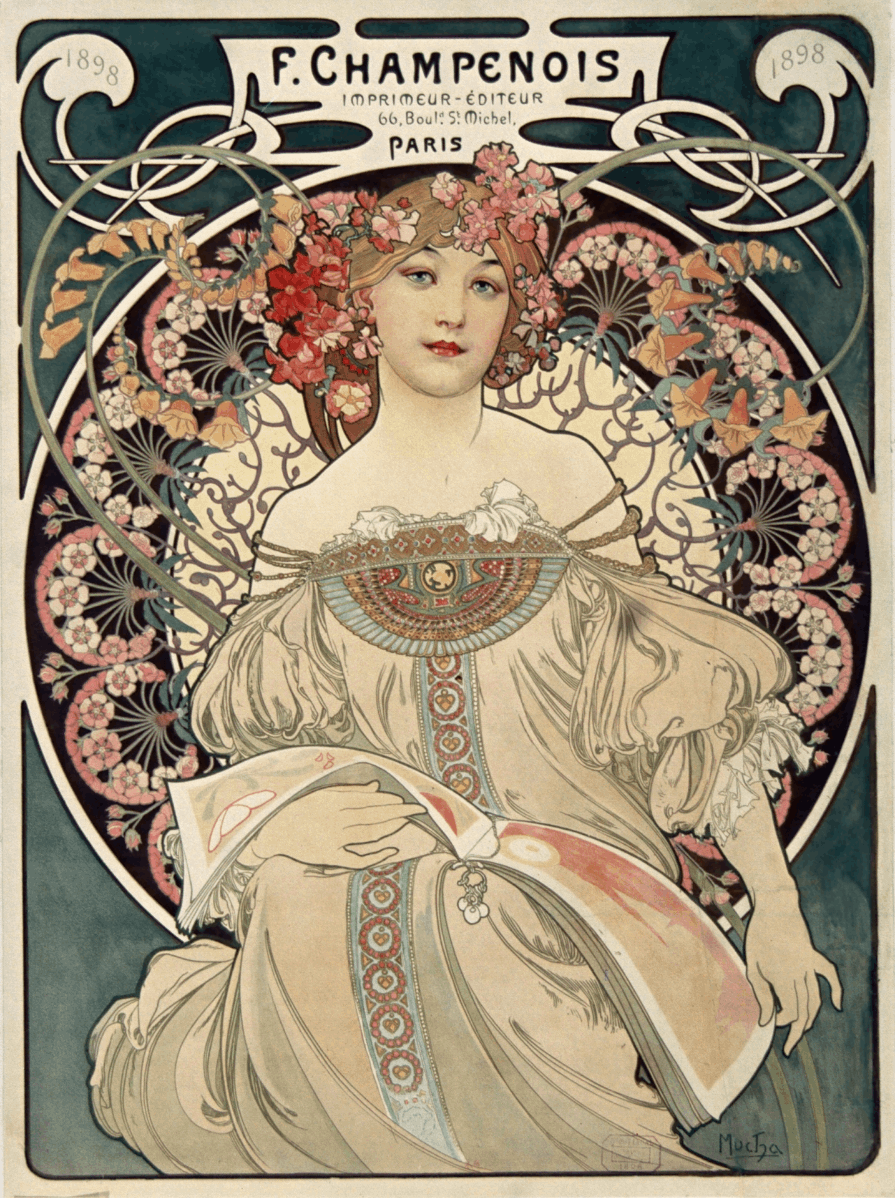
Art Nouveau was a European design movement popular during the early 1900s that encompassed architecture, furniture and decorative art. The style emphasized organic and geometric forms, simple floral patterns, “whiplash” curves and angular contours. It aimed to raise the status of craft by creating buildings and interiors in which every element partook of the same visual vocabulary.
A brief summary of the period
In Europe and beyond, the decorative and graphic arts were influenced by Art Nouveau, which was known by various names and aimed to modernize design. Emphasizing linear contours over color, it drew inspiration from organic and geometric forms. According to traditional hierarchies of the arts, painting and sculpture were considered superior to craft-based decorative arts such as ceramics.
Impactful artists of the Art Nouveau period
- Gustav Klimt
- Victor Horta
- Aubrey Beardsley
- Antoni Gaudí
- Hector Guimard
- Charles Rennie Mackintosh
- Alphonse Mucha
- Louis Comfort Tiffany
The Fauvism Period
The Fauves were a group of artists who expressed personal feelings by using vivid, often unmixed color, striking surface design and a bold approach to execution. In other words, they could paint the sky orange, trees blue and simple forms and saturated colors drew attention to the flatness of their canvases.
A brief summary of the period
Fauvism was an early 20th-century art movement founded by a group of French painters who were inspired by the work of Vincent van Gogh, Paul Gauguin, Georges Seurat, and Paul Cézanne. These painters shared the use of intense color as a vehicle for describing light and space and redefined pure color and form as means of communicating their emotional states. Fauvism proved to be an important precursor to Cubism and Expressionism, as well as a touchstone for future modes of abstraction.
Impactful artists of the Art Nouveau period
- Henri Matisse
- Raoul Dufy
- Maurice de Vlaminck
- Kees van Dongen
- Georges Braque
The Ashcan School Period
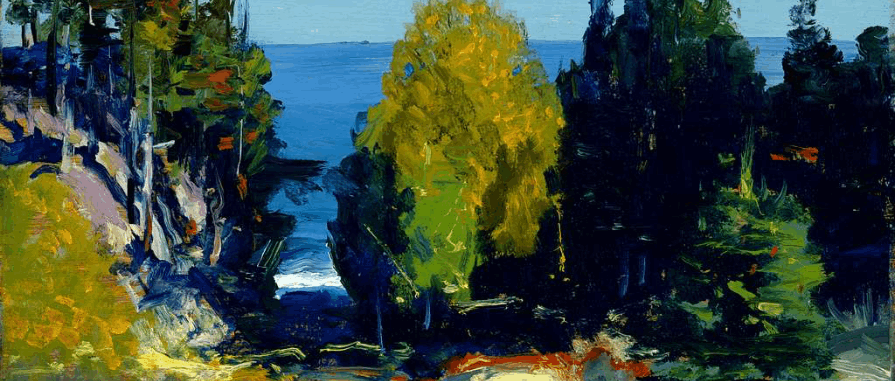
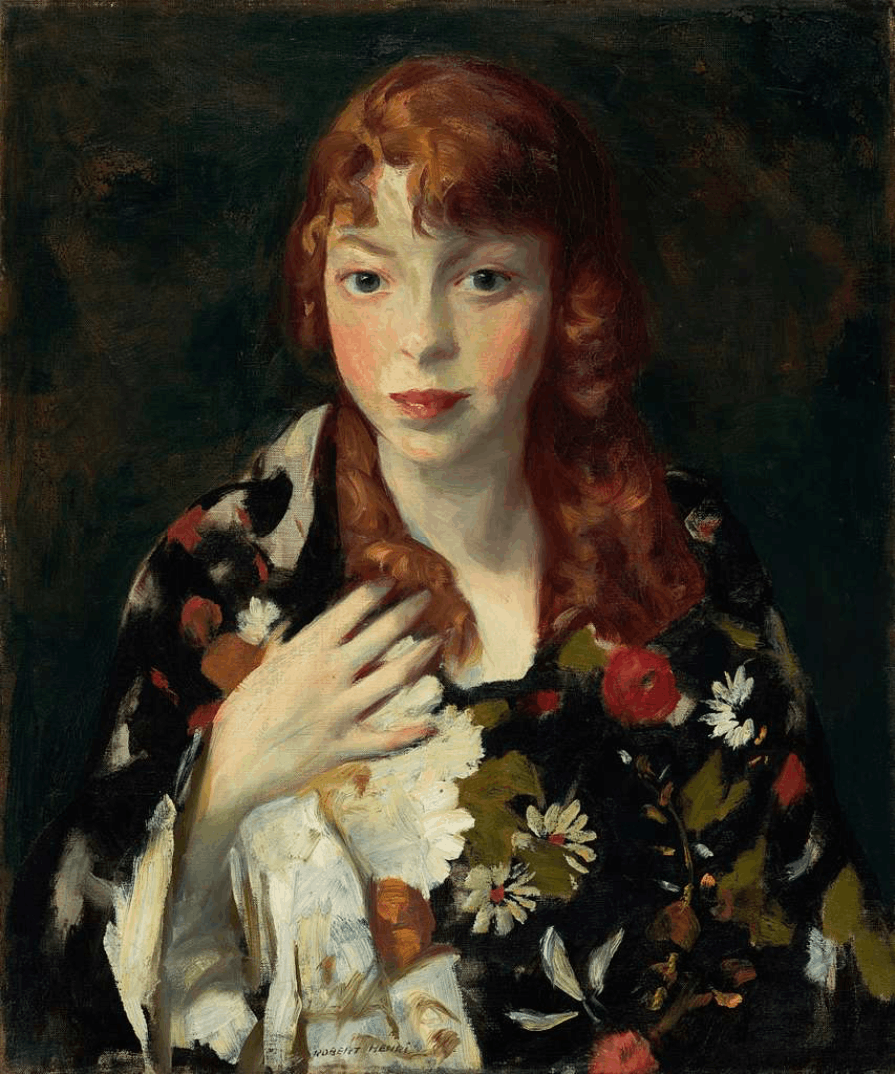
The Ashcan school of American realism was a loose grouping of artists based in New York City. They painted urban life, using bold brushwork and a dark palette to capture scenes of city streets and the working class. The group was assembled by Robert Henri in 1902 and named for his studio at the time, which was located on Lexington Avenue near the Empire State Building. Their works were highly influential on later realists such as Edward Hopper and Andrew Wyeth.
A brief summary of the period
The Ashcan School was a group of American artists active from the late 1890s to the early 1920s, who were known for their depictions of New York City slum life. They believed that art should depict real-life situations and as such were inspired by painter Robert Henri, who taught them that they could paint what they saw without idealizing it. Their paintings were revolutionary because they focused on working-class people rather than on scenes of rural life or domestic tranquility. In doing so, they became part of a larger movement away from 19th-century European Romanticism toward modernity.Impactful artists of the Ashcan School period
- Robert Henri
- George Bellows
- William Glackens
- John Sloan
The Expressionism Period
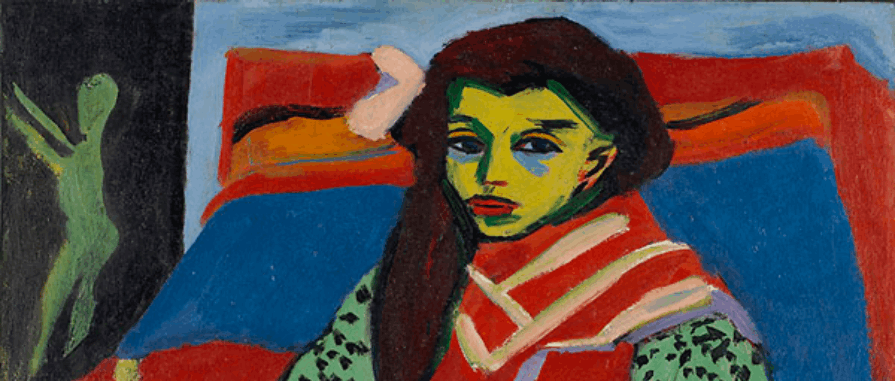
In response to the Impressionist movement and Symbolism, the Expressionists explored spirituality and emotion in art. They used distorted imagery, a rich palette, and swirling brushstrokes to convey turbulent inner states or mysteries of nature. The movement also often recorded social criticism of the modern city as well as those people in society that had been shunned and alienated for so long.
A brief summary of the period
The Expressionist movement began in Germany during the early 20th century as a reaction to increasing discord between humanity and nature and to feelings of spiritual loss. The movement was inspired by late 19th-century Symbolist currents in art, along with the works of Vincent van Gogh, Edvard Munch, and James Ensor. Its basic tenets included distortion of form, intense emotionality, and the use of strong colors to convey inner feelings. During its classic phase from 1905 to 1920, it spread throughout Europe
Impactful artists of the Expressionism period
- Ernst Ludwig Kirchner
- Käthe Kollwitz
- Chaim Soutine
- Franz Marc
- Egon Schiele
- Wassily Kandinsky
- Paul Klee
- Max Beckmann
- Emil Nolde
- Karl Schmidt-Rottluff
The Cubism Period
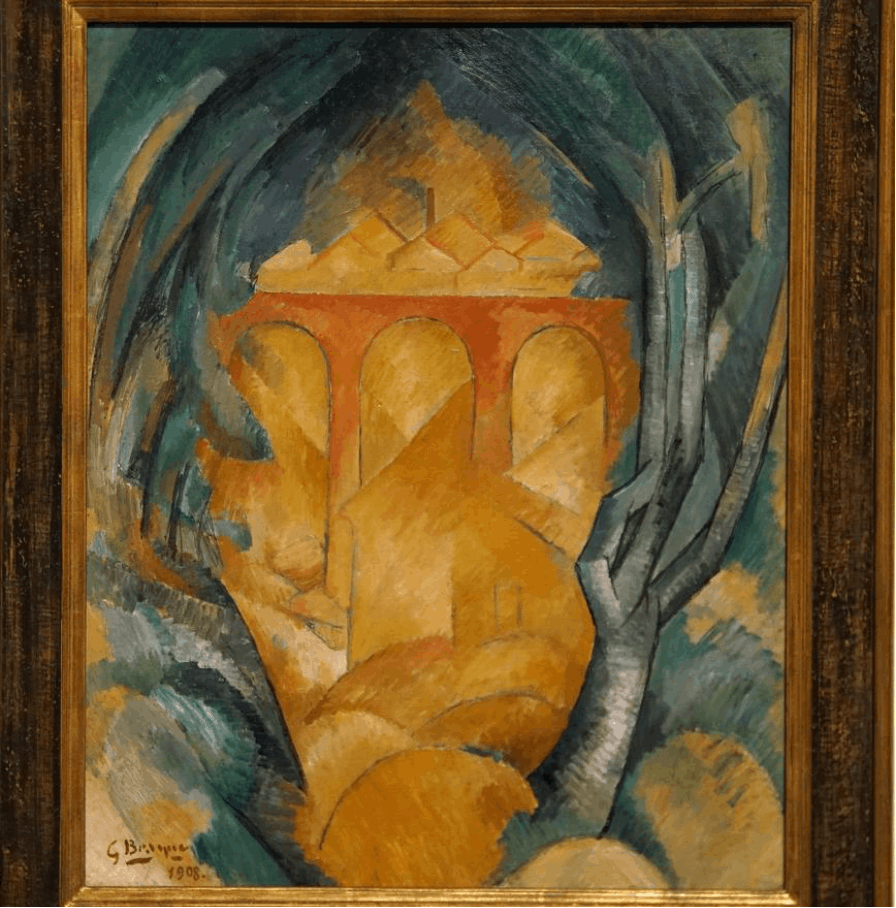
Cubism was an important development in the history of art, which gave artists new ways to describe space, volume and mass. Cubism was a radical break from older styles of painting and sculpture, which had relied on realistic modeling and perspective. Instead, it used small planes placed at odd angles in shallow space. The Salon Cubists were especially skilled at this method, creating many interesting effects.
A brief summary of the period
Cubism was developed in the aftermath of Les Demoiselles d’Avignon, a 1907 painting by Pablo Picasso that shocked viewers with its depiction of five nude figures upon an abstracted tableau. Georges Braque, who had been experimenting with Paul Cezanne’s emphasis on geometric structures, worked with Picasso to develop Cubist techniques and subject matter. The movement led almost directly to experiments with non-representation by many different artists.
Impactful artists of the Cubism period
- Pablo Picasso
- Fernand Léger
- Robert Delaunay
- Jacques Lipchitz
- Jean Metzinger
- Georges Braque
- Juan Gris
- Sonia Delaunay
- Raymond Duchamp-Villon
Raymond Duchamp-Villon
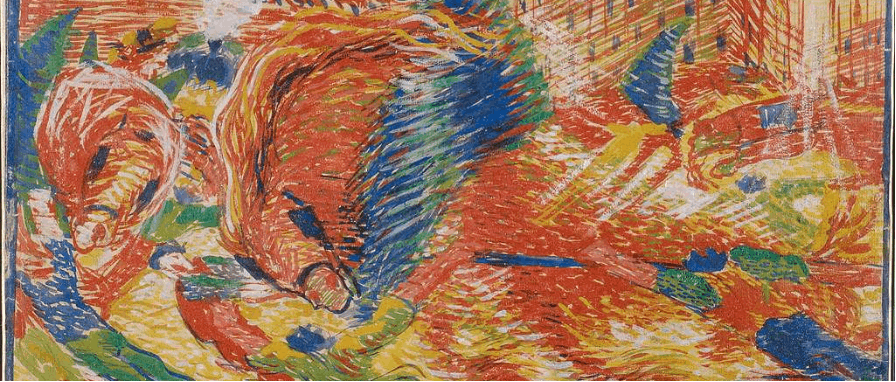
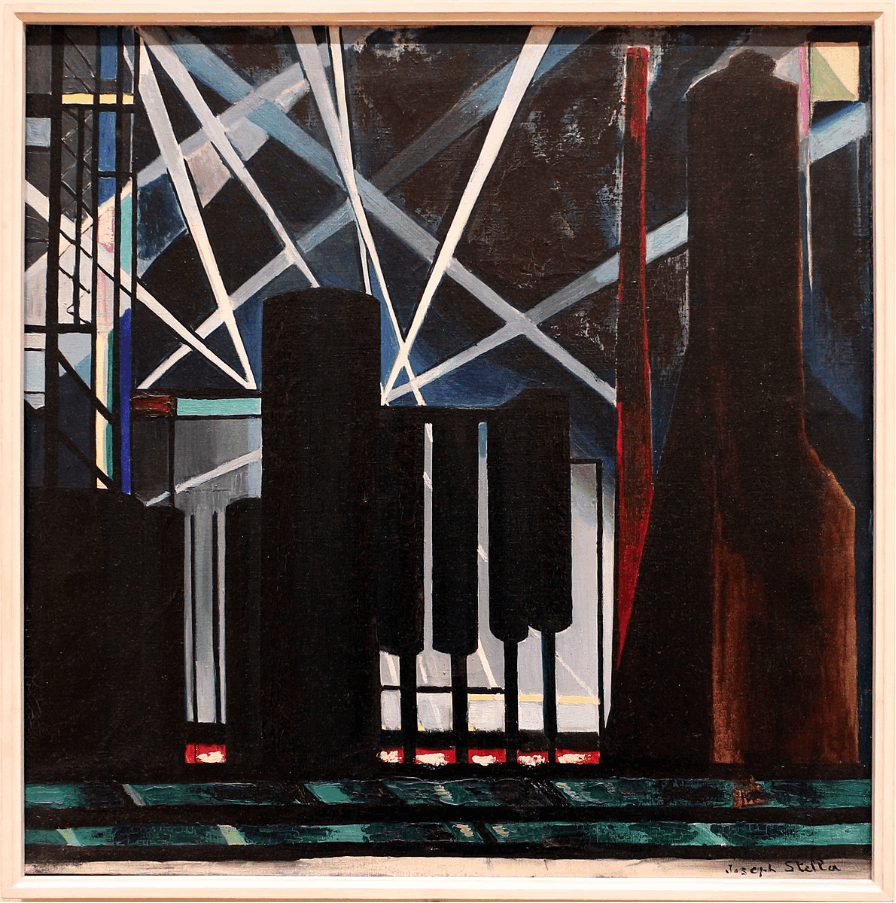
Futurism was the most important art movement of the twentieth century, arising from interactions with French Cubist ideas and a general desire for progress. Futurism celebrated advanced technology and urban modernity. Most of its adherents were painters and sculptors, who worked in traditional media such as painting and sculpture, and in an eclectic range of styles.
A brief summary of the period
Focusing on progress and modernity, the Futurists sought to sweep away traditional artistic notions. They emphasized drama and used portrayals of urban landscapes, trains, cars, and airplanes in their art. They glorified speed and violence as a way to advance change. Futurism was invented in Italy and became the most influential movement of its time. Futurist ideas were utilized by artists in Britain, the US and Japan while Futurist works were displayed all over Europe. Futurism influenced Dada and German Expressionism while anticipating Art Deco.
Impactful artists of the Futurism period
- Umberto Boccioni
- Joseph Stella
- Carlo Carrà
- Antonio Sant’Elia
- Gino Severini
- Natalia Goncharova
The Suprematism Period
Suprematism developed out of the Russian avant-gardes’ ideas about language and the role and limits of art. This movement, led by Kazimir Malevich, created a radically abstract painting with simple geometric forms. It emphasized the irreducible characteristics of the medium and was sometimes quite mystical or spiritual. It searched for totally abstract art, the point beyond which their work could not go without ceasing to be art.
A brief summary of the period
Suprematist art, the creation of Kazimir Malevich, was highly radical. It rejected the “old” rules connected to storytelling. Inspired by this new way of thinking, Malevich envisioned abstract art reduced to its most fundamental geometric forms. Following other Russian writers, Malevich asked what constituted verse and prose, which he saw as similar questions for painting.
Impactful artists of the Suprematism period
- Kazimir Malevich
- Alexander Rodchenko
- El Lissitzky
- Olga Rozanova
Olga Rozanova
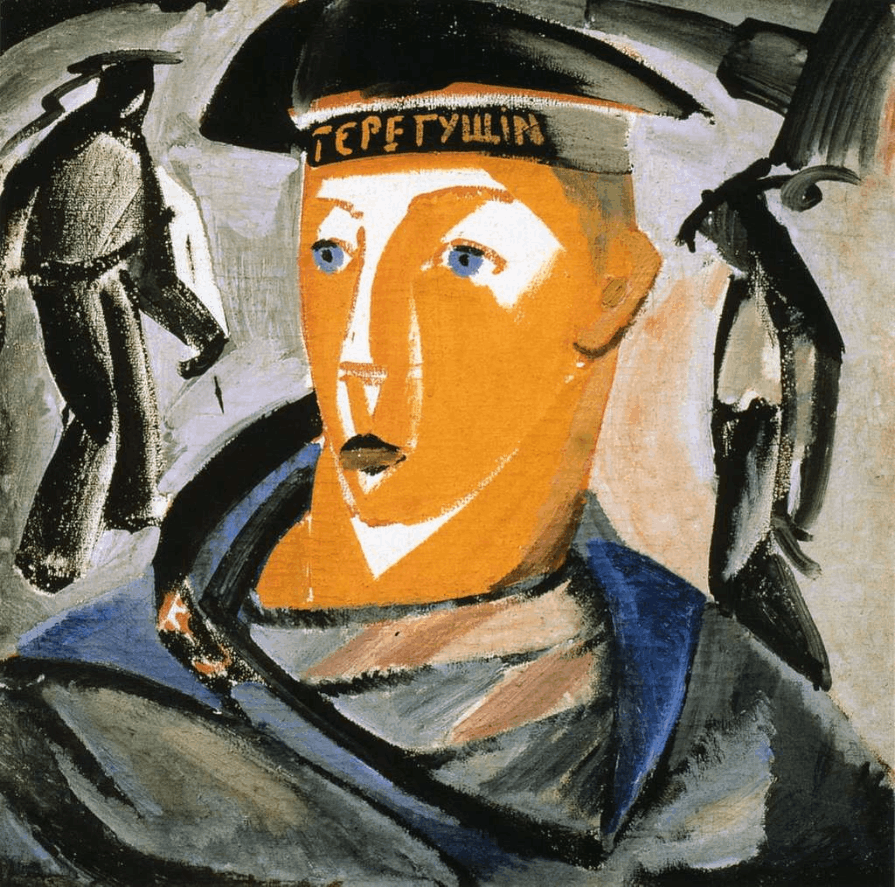
The Constructivist movement, originated in Russia during the first decade of the 20th century. The movement was inspired by futuristic urban planning, specifically new ways of living that encouraged physical and spiritual health of a community. It was also a rebellion against the ‘bourgeois’ art world and its focus on individual expression and formalism.
A brief summary of the period
Constructivism was the most influential modern art movement in twentieth century Russia. It came fully to light after 1917 with its aesthetic roots fixed firmly in the Suprematism movement. The movement called for a new aesthetic language and borrowed elements of Cubism and Futurism. At its heart was the idea that artmaking should be approached as a cerebral process of construction.
By the early 1920s, Constructivist art had evolved to accommodate the idea of Productivism by applying the aesthetic principles of Constructivism to “everyday” art such as fashion, photography, graphic and textile design, theatre, and cinema. Nevertheless, by the early 1930s, the Soviet avant-garde had fallen foul of the new regime that wished to promote the more transparent style of Socialist Realism.
- Gustave Courbet
- Édouard Manet
- John Singer Sargent
- Ilya Repin
- Henri Fantin-Latour
- Jean-François Millet
- James Abbott McNeill Whistler
- Thomas Eakins
- Honoré Daumier
The Dada Period
Dada was a movement in art and was presented in Zurich as a reaction to World War I but it inspired similar groups in other cities, ending with the rise of the Surrealism movement. The focus was on posing difficult questions, sometimes via new tactics such as Marcel Duchamp’s “ready-mades,” which forced viewers to ask questions about the extent of artistic creativity and overall definition of art.
A brief summary of the period
Dada was an artistic and literary movement. It arose as a reaction to World War I and nationalism that many thought had led to the war. It was a powerful influence on artists in many cities, including Berlin, Hanover, Paris, New York, and Cologne. That movement dissipated with the establishment of Surrealism, but the ideas it gave rise to have become the cornerstones of various categories of modern art.
Impactful artists of the Dada period
- Francis Picabia
- Marcel Duchamp
- Man Ray
- Hannah Höch
- Sophie Taeuber-Arp
- André Breton
- Hans Arp
- Raoul Hausmann
- Hans Bellmer
- Tristan Tzara
- Marcel Janco
- Max Ernst
4 - Hugo Ball
- Claude Cahun
- Kurt Schwitters
- Baroness Elsa von Freytag-Loringhoven
The De Stijl Period
Dutch De Stijl, a 20th-century art movement, reacted against Art Deco and focused on abstract forms and primary colors. Piet Mondrian was influenced by the mystic ideas of Theosophy, while Theo van Doesburg’s journal advocated for the fusion of form and function as the ultimate style — encompassing painting, sculpture, industrial design, architecture, and typography, influencing the Bauhaus and International Style.
A brief summary of the period
The Netherlands-based De Stijl movement, which embraced an abstract, pared-down aesthetic centered in basic visual elements such as geometric forms and primary colors, was a reaction against the decorative excesses of Art Deco. By reducing the quality of their art to a universal visual language appropriate to the modern era, De Stijl artists hoped to create an ideal fusion of form and function.
Impactful artists of the De Stijl period
- Theo van Doesburg
- Piet Mondrian
The Bauhaus Period
The Bauhaus art school in Weimar, Germany was founded by Walter Gropius and promoted a comprehensive and multi-disciplined approach to the arts. The movement put equal store in form and function, reducing decoration and frills, while promoting creativity and industrial design. Although a formal school, the name became equated with modern German design from the early 20th century, including many influential teachers across the world.
A brief summary of the period
The Bauhaus arguably had the most influence on art and architecture. The Bauhaus was influenced by 19th-century artistic directions such as the Arts and Crafts movement, as well as Art Nouveau which established the union of creativity and manufacturing. By mid-1920s, it favored art and industrial design integration. The school is also famous for its extraordinary faculty led the development of modern art throughout Europe and the United States.
Impactful artists of the Bauhaus period
- Walter Gropius
- Paul Klee
- Josef Albers
- Lyonel Feininger
- Theo van Doesburg
- Oskar Schlemmer
- László Moholy-Nagy
- Wassily Kandinsky
- Marcel Breuer
- Anni Albers
- Naum Gabo
- Johannes Itten
The Surrealism Period
Influenced by psychoanalyst Sigmund Freud’s theories on the unconscious, surrealism sought to access powerful ideas through automatic writing or dreams. Surrealist artists rebelled against bourgeois values, calling for a revolution of the mind. They used recurring motifs to shock viewers out of their comfortable notions of reality.
A brief summary of the period
Surrealists were led by André Breton, sought to explore the unconscious as a means of liberating the imagination and sparking social revolution. Influenced by psychoanalysis and Karl Marx, they believed that the rational mind repressed the power of the imagination, which could be accessed through dreams and other non-rational states. The group was deeply immersed in revolutionary politics.
Impactful artists of the Surrealism period
- André Breton
- Hans Arp
- Max Ernst
- Salvador Dalí
- Alberto Giacometti
- Joan Miró
- René Magritte
- Man Ray
- Yves Tanguy
- Leonora Carrington
- Pablo Picasso
- Meret Oppenheim
- Hans Richter
- Hans Bellmer
- Luis Buñuel
- Claude Cahun
- Remedios Varo
- André Masson
- Gala Dalí
- Paul Éluard
- Louis Aragon
- Paul Éluard
- Louis Aragon
- Charles Baudelaire
The Social Realism Period
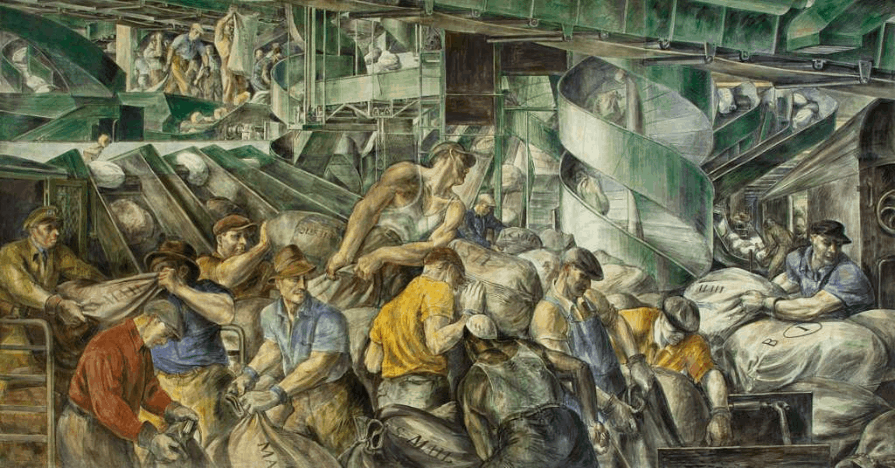
In the 1930s and 1940s, the term “Social Realism” referred to an artistic movement in which American artists explored both artistic and political possibilities. The movement arose from the Great Depression, a time of racial conflict and political idealism after the Mexican Revolution and Russian Revolution. Many artists were employed by the government Works Progress Administration (WPA) by using new platforms to raise awareness about social issues.
A brief summary of the period
During the 1920s and 1930s, a period of global economic depression, heightened racial conflict, the rise of fascist regimes internationally, and great optimism after both the Mexican and Russian revolutions, artists became dissatisfied with the French avant-garde and their own isolation from greater society. They sought to find a new vocabulary and a new social importance in order to fight capitalist exploitation of workers and stem the advance of international fascism.
Impactful artists of the Social Realism period
- Ben Shahn
- Isamu Noguchi
- Jacob Lawrence
- Norman Lewis
- Reginald Marsh
- Raphael Soyer
- Romare Bearden
- Rockwell Kent