Timeless Love Rediscovered
In the year 2010, a stunning discovery was made in an abandoned apartment in Paris, locked away and forgotten for nearly 70 years. The apartment belonged to Marthe de Florian, a once-famous actress, socialite, and prestigious courtesan. She left the apartment in a hurry when the German army threatened to occupy Paris in June 1940, seeking refuge in the south of France. Decades after her death in 1955, her granddaughter, Francine, learned that she was the legal heir to the apartment. In 2010, lawyer Edmond de Bochu was sent with a warrant to the location, and when the apartment doors were opened for the first time in decades, the world witnessed the remarkable time capsule of Madame Marthe de Florian’s life.
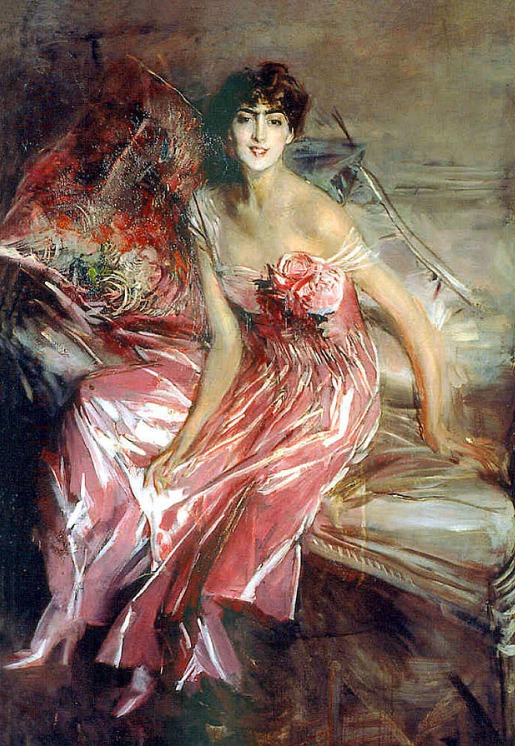
The spacious apartment, approximately 150 square meters, was situated on the 4th floor of a prestigious apartment building in La Bruyere Square, on the Right Bank of Paris, near the Garnier Opera House in the 9th arrondissement. It was described as one of the most important “time capsules” of the Belle Epoque, offering a glimpse into the art and culture of the 19th century. Inside, everything was preserved, untouched, and covered in a layer of old dust. The wooden ceilings, an antique wood stove, and a large stuffed ostrich in the living room all contributed to the authentic atmosphere. However, what truly captured the attention of the world was a remarkable painting that adorned the dining area: a portrait of an unknown French woman.
The painting was recognized almost immediately as the work of Giovanni Boldini, one of the most renowned portraitists in Paris during the late 19th century. The painting was initially titled “Period Portrait of an Unknown French Woman.” However, the discovery of a card in a dresser drawer in Madame Marthe de Florian’s bedroom soon revealed the true identity of the subject. The card was accompanied by a passionate love letter in Boldini’s familiar handwriting, confirming that the woman in the painting was none other than Marthe de Florian herself. This revelation added a layer of mystery and intrigue to the portrait and solidified its significance in art history.
After its discovery, the original painting was sold for an impressive 2.1 million euros. A slightly different copy of the painting, mistakenly referred to as “Woman in Pink,” is currently displayed at the New Orleans Museum of Art in Louisiana. The apartment, with its untouched interiors, remains a captivating testament to the daily life of wealthy French individuals during the Belle Epoque. Unfortunately, during the outbreak of the COVID-19 pandemic, the apartment was closed to visitors as the descendants of Madame Marthe de Florian, who owned the property and its contents, made the decision to protect and preserve this unique piece of history.
As more information about Marthe de Florian’s life came to light, it became evident that she was considered one of the most beautiful, glamorous, and sought-after high society women in Paris during the 1880s and 1890s. She was intimately involved with several prominent figures, including Pierre Valdec Rousseau, Paul de Chanel, and Gaston Dumarck, who were respectively the 68th, 11th, and 13th Presidents of France. Notably, she was also involved in an intimate relationship with Giovanni Boldini himself, adding further intrigue to the portrait he painted of her.
Giovanni Boldini, born in Ferrara, Italy, moved to France in 1872, where he became the favored portrait painter of high society and bohemian stars. His dynamic and lively painting style captivated his subjects, which included world-famous figures like Giuseppe Verdi and Sarah Bernhardt. He also shared a close friendship with Edgar Degas. Thanks to Degas’s recommendation, Boldini was appointed to supervise the Italian pavilion at the historic Paris World Exhibition in 1889, earning him the French Legion of Honor. Boldini’s success extended to New York, where he held his first solo exhibition in 1897, and he also represented Italy at the Venice Biennale on four occasions.
Giovanni Boldini passed away in Paris on July 11, 1931, and was buried in his hometown of Parma, where a museum was established in his memory to honor his significant cultural legacy. He left behind a captivating body of work, with his character even featured in the ballet “Franca Florio, Queen of Palermo,” composed by Lorenzo Ferraro in 2007. The ballet recounted the extraordinary beauty of Dana Franca, a famous Sicilian noblewoman who served as a muse to many painters, musicians, and poets during the Belle Epoque.
Following the discovery of the painting “Portrait of Madame de Florian” in 2010, the tale of this unique romantic relationship has inspired numerous works of literature, further adding to the allure and fascination of this captivating story. From Michel Gable’s novel “An Apartment in Paris” in 2014 to Alison Richman’s “The Velvet Hours” in 2016, the romance between Giovanni Boldini and Marthe de Florian continues to capture the hearts of readers and art enthusiasts alike. The painting itself, along with the untouched apartment, serves as a poignant reminder of a bygone era, preserving the legacy of Madame Marthe de Florian and her relationship with the renowned portrait painter Giovanni Boldini.