Van Gogh’s Bipolar Revelation
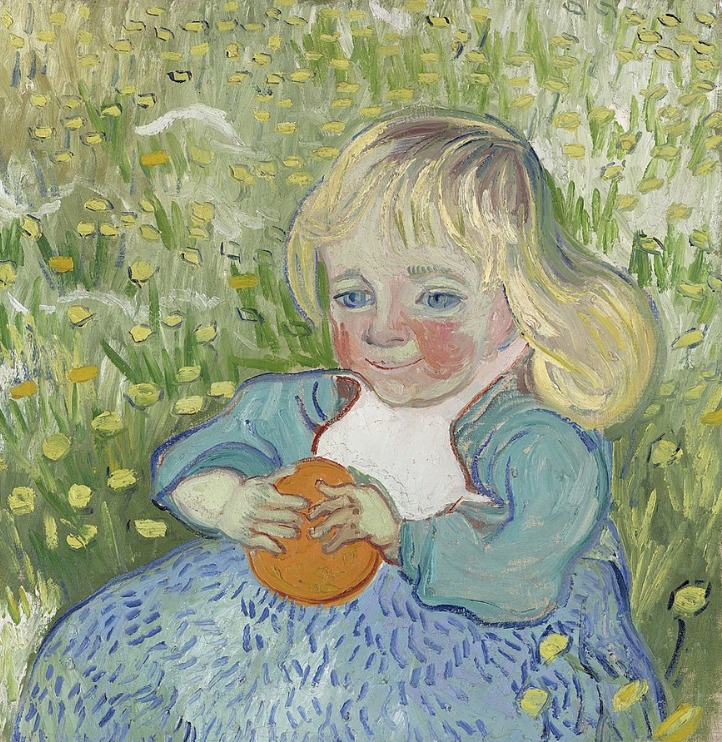
“The Child with an Orange” is one of Vincent van Gogh’s final paintings, completed in June 1890, just weeks before his tragic suicide. This artwork is part of a series of portraits depicting cheerful, righteous, pure, and optimistic children and teenagers—a theme that Van Gogh explored in his last days. In 1980, the painting became a central exhibit in a groundbreaking study conducted at the Center for Mental Health at the University of Zurich, shedding new light on Van Gogh’s mental health. The study revealed that Van Gogh likely suffered from bipolar disorder, a condition that, if diagnosed in his time, could have been treated with lithium. This essay delves into the significance of “The Child with an Orange,” Van Gogh’s mental state, and the poignant circumstances surrounding his final days.
Van Gogh’s Bipolar Disorder:
The study carried out at the Center for Mental Health in collaboration with the Art History Research Center of Winterthur, Switzerland, provided insights into Van Gogh’s mental health. While he was previously seen as eccentric with a tendency toward depression, the study identified Van Gogh as a patient with undiagnosed bipolar disorder, characterized by periods of mania and depression. Van Gogh’s manic episodes, marked by intense excitement and euphoria, coincided with bursts of creative energy, resulting in the use of vibrant colors and a vigorous painting technique. Conversely, his depressive episodes led to a cessation of artistic activity, reflecting feelings of sadness, despair, and isolation—ultimately culminating in his tragic decision to end his life.
The Role of Lithium:
When Van Gogh was born in 1853, lithium was already known as a medicinal substance. Initially used for treating podagra (gout), it was recognized for its ability to dissolve uric acid crystals. However, due to the risk of blood poisoning resulting from incorrect dosage, the drug’s use remained limited. It was not until 1949 that Australian psychiatrist John Cade discovered the efficacy of lithium salts in managing extreme emotional states. Despite this breakthrough, lithium was only approved for the treatment of manic disorder in 1970 and for bipolar disorder in 1979 by the FDA in the United States. For several years, bipolar disorder was colloquially referred to as “cynicism of the brain.”
Van Gogh’s Emotional Rollercoaster:
During the last year of his troubled life, Van Gogh experienced extreme emotional highs and lows. Prolonged periods of deep depression led to extended hospitalizations, alternating with shorter periods of elation and youthful exuberance during which he produced many remarkable works of art. After his release from the asylum at Saint-Rémy, Van Gogh moved to Oberserois, a town near his brother Theo, who had recently married and become a father. Van Gogh’s visit to Theo’s house in Paris, where he met his newborn nephew Vincent, triggered a surge of mania. This heightened state of excitement fueled his incessant painting of children in the surrounding area.
The Child with an Orange:
“The Child with an Orange” features Raul Lever, the two-year-old son of a local carpenter who supplied Van Gogh with wooden frames for his paintings. Van Gogh’s letters to Theo and his sister-in-law Johanna mention the carpenter’s son, demonstrating his fondness for the boy. Van Gogh’s manic phase during this period was likely extensive, as he spent only 70 days in Oberserois before taking his own life. Despite the brevity of his stay, he managed to create over 80 extraordinary paintings.